
Many reptile keepers are confused about how to properly use calcium supplements for their reptiles. Some rarely use it, while others “put that stuff on everything”! Let’s take a look at the facts, and see what the best approach to calcium supplementation really is.
Calcium is important for the health of your animals because it not only largely makes up their skeletons, it also powers muscle movements and nerve function. If the muscles and nervous system of an animal do not get the calcium they need, they will take it from the bones, leading to metabolic bone disease, a serious and life-threatening condition.
In addition to calcium, phosphorous is also needed for strong bones, and animals need it in about a 2:1 ratio, meaning they need about twice as much calcium as phosphorous. Most feeder insects, however, are deficient in calcium, yet rich in phosphorus, the opposite of what is needed for strong bones. To make up for this, calcium supplementation is required.
But how much calcium? Most keepers and breeders develop an approach that considers the calcium levels already in the food their animals are eating. To do this, you need an idea of the calcium/phosphorus ratios of the food items in question. That’s where the Nutrition Charts come in.
In addition to the average calcium/phosphorus ratios of various insects, we have also added a Supplementation Index. This tells you the relative importance of supplementing that food item. For example, the index of black soldier fly larvae is very low, so there is no need to supplement them. If, however, you are feeding crickets, the Supplementation Index is high, so it is advisable to supplement them moderately with every feeding.
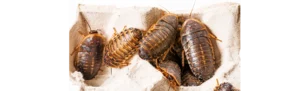
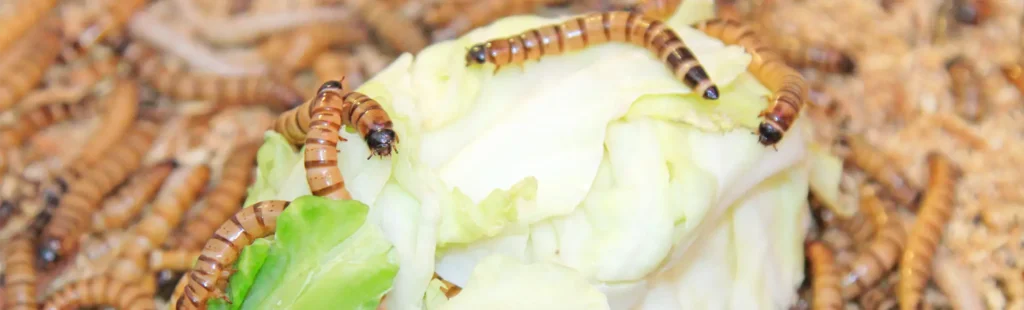
What if you are feeding a variety of foods, as you should? If the two items in question are dubias, which have a moderate Supplement Index, and BSFL, with a very low index, then only very light dusting of the dubias with supplement would be required, and the BSFL would need no supplementation. If we’re talking about feeding crickets and mealworms, which have high and very high indexes respectively, that is another matter. Dust all the crickets and mealworms well before every feeding.
It is best to err on the side of too much calcium, within reason. This is especially true with egg-laying females, who have a tremendous need for the mineral. However, it is possible to overdose an animal with calcium, so don’t go overboard.
What about vitamin D3? Well, animals cannot absorb calcium without it, so D3 must be provided in some form. If your animal is exposed regularly to unfiltered, natural sunlight, it can make its’ own D3. Likewise, if you are using a high-quality UVB bulb, your animal can also make most of it’s own D3. Animals deprived of UV light cannot make any D3, and you must provide all it needs. This is very tricky, however, so it is always recommended to provide high-quality lighting for reptiles, so they can regulate the amount of D3 they get.
So, when animals are being kept outside, calcium supplements without D3 are perfect. When an animal has high-quality artificial UVB lighting, products such as Repashy Calcium Plus Low D are called for. Calcium Plus High D is used when animals are kept without UVB lighting. These products also have an excellent combination of other vitamins added, so that, when used alongside a well balanced diet, all necessary vitamins are provided.